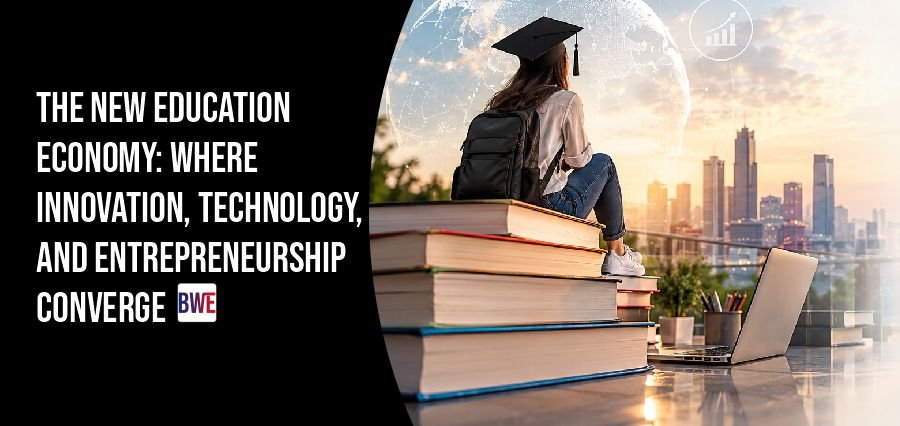
For generations, education has been built around a familiar formula: standardized curricula, examinations, grades, and academic achievement. While these foundations have helped millions acquire knowledge and professional qualifications, the world that students are entering today looks very different from the one these systems were originally designed to serve. Technological disruption, evolving industries, and changing workforce expectations have exposed a growing gap between what students learn in classrooms and what they need to thrive in real life.
This gap has sparked what many describe as the skills revolution. Around the world, visionary educators are rethinking learning by focusing not only on what students know but also on what they can do. They are introducing new approaches that prioritize adaptability, creativity, leadership, and problem-solving, capabilities that traditional systems often overlook. In doing so, they are preparing learners for a future defined by constant change rather than predictable career paths.
Beyond Memorization: Learning to Think, Not Just Recall
Traditional education has often rewarded the ability to memorize information and reproduce it during examinations. While foundational knowledge remains important, information has become more accessible than ever before. The challenge is no longer finding answers but understanding how to evaluate, interpret, and apply them.
Visionary educators are placing greater emphasis on critical thinking. They encourage students to question assumptions, analyze multiple perspectives, and develop independent conclusions. Rather than focusing solely on correct answers, they create learning environments where curiosity and inquiry become essential parts of the educational experience.
In a world filled with information, the ability to think critically is becoming more valuable than the ability to simply remember facts.
Creativity as a Core Competency
For many years, creativity was often viewed as a talent reserved for artists, designers, or performers. Today, it is increasingly recognized as a critical skill across industries and professions.
Innovative educators understand that future challenges will require original thinking and innovative solutions. As a result, they are integrating creativity into learning experiences through project-based assignments, interdisciplinary exploration, and collaborative problem-solving activities.
Students are encouraged to experiment, take intellectual risks, and view mistakes as opportunities for growth. This approach helps develop the confidence and adaptability needed to navigate uncertainty and generate new ideas in rapidly changing environments.
The Rise of Entrepreneurial Thinking
One of the most significant shifts within the skills revolution is the growing focus on entrepreneurial thinking. This does not necessarily mean teaching every student to start a business. Instead, it involves cultivating a mindset centered on initiative, opportunity recognition, resilience, and innovation.
Visionary educators are helping students identify problems, explore solutions, and transform ideas into action. They encourage learners to take ownership of their projects, think strategically, and develop the confidence to pursue ambitious goals.
These experiences prepare students not only for entrepreneurship but also for leadership roles within organizations, communities, and industries that increasingly value proactive and adaptable individuals.
Emotional Intelligence Takes Center Stage
Academic excellence alone is no longer enough to guarantee success. The ability to communicate effectively, collaborate with others, and manage emotions has become equally important.
Forward-thinking educational leaders are placing greater emphasis on emotional intelligence. Students are learning how to build relationships, navigate conflict, demonstrate empathy, and work effectively within diverse teams.
These skills are particularly valuable in a world where automation is increasingly capable of performing technical tasks. Human-centered capabilities such as emotional awareness, communication, and interpersonal understanding remain difficult to replicate and continue to grow in importance.
Preparing Students for Careers That Do Not Yet Exist
One of the greatest challenges facing education is preparing learners for a future that remains largely unpredictable. Many of the careers today’s students will pursue have yet to be fully defined.
Visionary educators recognize this reality and are focusing on transferable skills rather than narrowly defined career preparation. Adaptability, digital literacy, collaboration, and lifelong learning are becoming central components of modern educational models.
Instead of training students for specific roles, these educators equip them with the tools needed to learn continuously, embrace change, and seize emerging opportunities throughout their lives.
Technology as a Tool, Not the Destination
Education has undergone tremendous change owing to technology, yet visionary teachers realize that technology per se cannot solve all the problems. The point is that what matters is how this tool is applied in order to improve the educational process.
Indeed, artificial intelligence, virtual collaboration technologies, adaptive learning technologies, and digital sources can facilitate personalization of education and its accessibility. Yet efficient educators apply technology to promote engagement, creativity, and thinking of students.
Conclusion
The Skills Revolution can be described as a complete change in the way in which success is viewed and attained. Although education has helped to provide the building blocks for success, there is a need for a greater variety of skills that go beyond the academic curriculum.
Visionary educators have taken the lead and have emphasized on critical thinking, creative skills, emotional intelligence, entrepreneurial spirit, adaptability, and life-long learning. This is the skills set that will enable people to innovate, work together and prosper in a changing world.
In the changing educational environment, those institutions and educational leaders who support this revolution will have a vital part in equipping the future generation not only to live in the future, but also to create it.