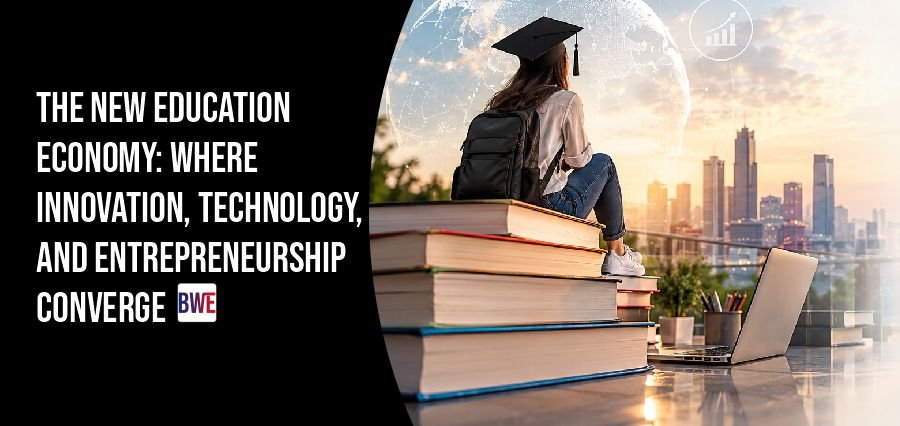
Education is no longer confined to classrooms, semesters, and standardized pathways. Across the world, a profound shift is underway as technology, entrepreneurship, and innovation redefine how people learn, develop skills, and prepare for the future. The emergence of the new education economy reflects a broader transformation in which learning has become more accessible, personalized, and closely aligned with the demands of a rapidly changing world. As traditional models evolve, a new ecosystem is taking shape, one that connects educators, entrepreneurs, businesses, and learners through shared opportunities for growth and impact.
The Shift from Institutions to Learning Ecosystems
For generations, educational institutions served as the primary gatekeepers of knowledge. Today, learning is increasingly taking place across a broader network of platforms, communities, organizations, and digital environments. Knowledge is no longer limited to a physical campus or a fixed curriculum.
Learners can access expert-led courses, industry certifications, mentorship programs, and collaborative learning communities from virtually anywhere. This evolution has transformed education from a linear process into a dynamic ecosystem where individuals continuously acquire new skills throughout their personal and professional lives. The focus is shifting from where learning happens to how effectively it prepares people for real-world challenges.
Technology as the Engine of Transformation
Technology has become one of the most powerful forces driving change in education. Digital platforms have expanded access to learning opportunities, allowing students and professionals to engage with educational content regardless of location or background.
Artificial intelligence, adaptive learning systems, and data-driven educational tools are further enhancing the learning experience. These technologies can identify individual strengths, learning preferences, and areas for improvement, enabling more personalized educational journeys. Rather than following a one-size-fits-all model, learners can progress at their own pace and receive support tailored to their unique needs.
The result is a learning experience that is more engaging, efficient, and responsive to the realities of modern life.
Entrepreneurship Is Redefining Educational Possibilities
While technology provides the tools, entrepreneurship is providing the vision. Around the world, founders and innovators are challenging conventional approaches to education and introducing new models designed to meet evolving learner needs.
Entrepreneurs are launching online academies, skills-based learning platforms, industry-focused training programs, and innovative educational communities. These ventures are often built around a simple principle: education should solve real problems and create tangible outcomes.
By identifying gaps in traditional systems, education entrepreneurs are developing solutions that connect learning with employability, innovation, and lifelong growth. Their willingness to experiment and adapt has accelerated the pace of change across the sector, making education more responsive to both learners and industries.
The Rise of Skills-Driven Learning
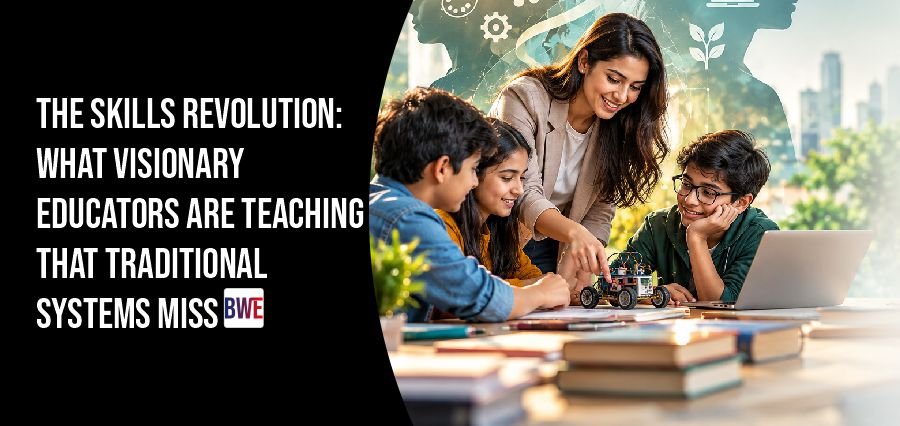
One of the defining characteristics of the new education economy is the growing emphasis on skills. While academic qualifications remain important, employers increasingly seek individuals who can demonstrate practical abilities, adaptability, and critical thinking.
This shift has fueled the popularity of certifications, micro-credentials, boot camps, and project-based learning experiences. Learners are pursuing targeted educational pathways that help them gain expertise in areas such as artificial intelligence, digital marketing, cybersecurity, leadership, and entrepreneurship.
The focus is moving beyond what individuals know toward what they can do. As industries continue to evolve, skills-based learning is becoming a key driver of career advancement and professional success.
Industry and Education Are Growing Closer Together
The relationship between education and industry has become increasingly interconnected. Businesses are no longer passive recipients of talent; they are actively participating in the learning ecosystem.
Organizations are partnering with educational institutions, supporting workforce development initiatives, and investing in employee upskilling programs. These collaborations help ensure that educational content remains relevant to market needs while creating stronger pathways from learning to employment.
This alignment benefits both learners and employers. Students gain access to industry-relevant knowledge and practical experiences, while businesses develop talent equipped to contribute from day one.
Innovation Beyond the Classroom
Innovation in education extends far beyond digital tools and online courses. It includes new approaches to curriculum design, learner engagement, assessment, and community building.
Forward-thinking educational leaders are incorporating experiential learning, interdisciplinary projects, entrepreneurial thinking, and real-world problem-solving into their programs. These approaches encourage learners to think creatively, collaborate effectively, and develop the resilience needed to navigate uncertainty.
The goal is no longer simply to transfer knowledge but to cultivate the capabilities required for long-term success in a rapidly changing environment.
Building the Future of Learning
The future of education will probably be influenced by increased convergence of technology, entrepreneurship, and humanistic approach towards learning. Technology such as artificial intelligence, immersive technology, global platforms for collaboration, and personalization of learning will keep playing an important role in education.
The future of education will belong to those educational approaches that combine technology with human connection, creativity, and purpose. It will belong to those learning environments where people learn not just to cope with changes but to create them.
Conclusion
The education economy of the future is an entirely different way of imagining learning and how it is delivered and consumed. In bringing innovation, technology, and entrepreneurship together, it is opening up access to learning, stimulating creativity, and preparing people for opportunities that were not even conceivable a decade ago.
As education changes, entrepreneurs find ways to meet needs, and technology keeps advancing, learning is being made more personal, more practical, and more lifelong.