Civilizations are often remembered for their monuments, but their lasting influence is usually carried through ideas. India’s intellectual heritage was built upon centuries of inquiry, where observation, debate, experimentation, and scholarship were regarded as essential tools for advancing society. The value of knowledge was measured not only by what it explained, but by what it enabled.
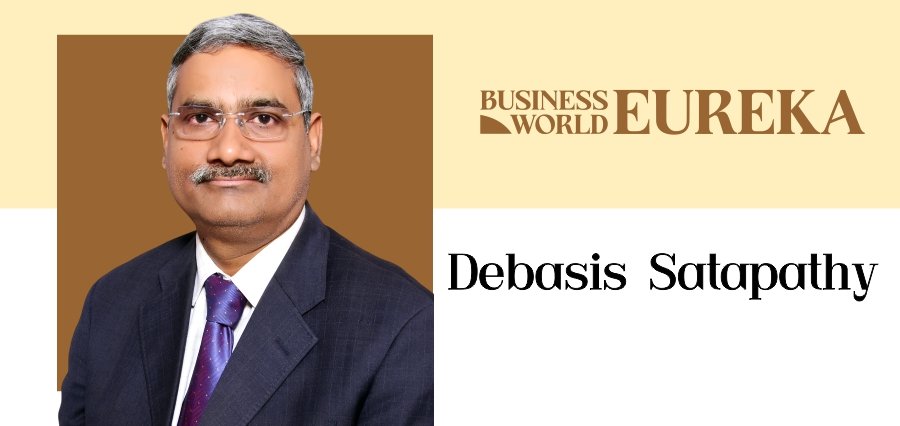
That principle remains relevant today as institutions, researchers, and innovators seek solutions to increasingly complex challenges. Debasis Satapathy has built his work around this belief, demonstrating how knowledge can move beyond theory to create meaningful outcomes. His journey reflects an ongoing effort to strengthen the connection between learning, innovation, and societal advancement, while contributing to a future shaped by both intellectual depth and practical application.
As Debasis Satapathy, Professor at IITs & IIMs, with more than three decades of experience in human resources and leadership, has developed a distinctive approach that bridges ancient Indian knowledge systems with modern management practices. Drawing extensively from the Mahabharata, Bhagavad Gita, Ramayana, Arthashastra, Vedas, Vedanta, and Upanishads, Debasis has emerged as a respected voice advocating leadership rooted in ethics, self-mastery, and purpose. His work across corporate organizations, executive education programs, IITs, IIMs, and academic institutions has helped redefine how leadership and human resource management can be understood through the lens of India’s intellectual heritage.
Where Ancient Wisdom Meets Contemporary Leadership
For Debasis, the relevance of ancient Indian texts extends far beyond cultural appreciation or philosophical inquiry. He believes these works contain practical frameworks that can guide leaders through many of the same challenges faced in today’s organizations. Leadership dilemmas, ethical conflicts, decision-making under pressure, emotional intelligence, and the management of diverse teams are not modern phenomena. They are themes deeply embedded within India’s great epics and philosophical traditions.
His interpretation of the Mahabharata, in particular, presents the epic not merely as a historical narrative but as a sophisticated study of human behavior and leadership. The dialogue between Krishna and Arjuna serves as a powerful example of coaching, mentoring, and ethical decision-making. Arjuna’s uncertainty mirrors the challenges faced by contemporary professionals confronting difficult choices, while Krishna’s guidance highlights the importance of purpose, responsibility, and clarity of thought. Through these parallels, Debasis demonstrates how ancient narratives continue to offer meaningful insights for modern leaders.
Transforming Human Resource Philosophy
Throughout his professional journey, Debasis has consistently emphasized that effective people management begins with self-awareness. While many organizations focus heavily on systems, policies, and performance measurements, he advocates a more balanced approach that recognizes the importance of human values alongside operational efficiency. According to his philosophy, trust, resilience, empathy, and ethical conduct are not secondary considerations but essential foundations for sustainable organizational success.
At NBCC (India) Limited, this philosophy finds practical expression through a people-centric approach to human resources. Debasis views HR as the heartbeat of an organization, responsible for nurturing culture, developing talent, and ensuring that growth remains both ethical and inclusive. Under his leadership, HR policies were treated not simply as administrative mechanisms but as instruments for creating fairness, dignity, and trust within the workplace.
The organization’s emphasis on learning, mentoring, employee well-being, and continuous development reflects this commitment. Employees are encouraged to grow not only as professionals but also as individuals capable of realizing their broader potential. Mental health initiatives, leadership development programs, and capacity-building efforts reinforce a culture where human growth and business performance advance together.
The Mahabharata as a Leadership Classroom
Debasis’s fascination with the Mahabharata stems from its ability to illuminate the psychological and moral dimensions of leadership. While many management frameworks focus on strategy and execution, the epic examines the internal struggles leaders face when navigating complex situations. It explores ambition, responsibility, integrity, loyalty, and the consequences of decisions made under pressure.
Through his teachings and writings, he identifies leadership archetypes represented by various characters within the epic. Krishna embodies strategic wisdom and visionary guidance. Arjuna reflects focus, discipline, and the pursuit of excellence. Yudhishthira symbolizes ethics and justice. Bhishma demonstrates commitment and governance, while Vidura represents emotional intelligence and diplomacy. Each figure provides distinct lessons that remain relevant to modern leadership development. The competency framework illustrated in his work highlights how these characters offer practical insights into crisis management, negotiation, resilience, mentoring, integrity, and strategic thinking.
For Debasis, leadership begins with mastering oneself before attempting to lead others. This principle forms the foundation of his broader management philosophy and distinguishes his work from conventional leadership models.
Integrating Indian Knowledge Systems into Management Education
One of Debasis’s most significant contributions has been his effort to integrate Indian Knowledge Systems into management education. His work in premier institutions such as IITs and IIMs reflects a belief that leadership education should extend beyond technical skills and managerial tools. Future leaders, he argues, must also develop ethical awareness, mindfulness, emotional intelligence, and a strong sense of purpose.
By introducing students to texts such as the Mahabharata and Bhagavad Gita, he encourages them to explore the relationship between results and relationships, profit and purpose, competition and compassion. This approach helps cultivate leaders capable of balancing performance expectations with human considerations. Rather than viewing ethics and business success as competing priorities, students learn to recognize them as complementary dimensions of effective leadership.
His curriculum addresses topics such as ethical decision-making, strategic thinking, resilience, emotional intelligence, negotiation, mentoring, adaptability, and leadership styles. By combining ancient wisdom with contemporary management theory, he provides students with a broader and more nuanced understanding of leadership challenges.
Shaping Future Leaders Through Reflection and Self Awareness
Debasis has observed that students and executives often begin their exploration of Indian management wisdom with curiosity and occasional skepticism. However, as they engage more deeply with the teachings, they frequently discover striking similarities between ancient narratives and modern organizational realities.
Lessons derived from Krishna’s counsel, Arjuna’s uncertainty, and Yudhishthira’s moral discipline provide participants with fresh perspectives on leadership, teamwork, decision-making, and self-management. Executives particularly appreciate how these teachings enhance emotional intelligence and help them navigate complex interpersonal dynamics within organizations. The enduring relevance of these lessons reinforces Debasis’s belief that leadership is ultimately a journey of self-mastery and ethical courage.
A Broader Vision of Leadership
What distinguishes Debasis’s work is his ability to connect multiple streams of Indian thought into a cohesive leadership framework. His approach draws not only from the Mahabharata but also from the Ramayana, Bhagavad Gita, Arthashastra, Vedas, Vedanta, and Upanishads. Each tradition contributes a different dimension to leadership development.
From the Mahabharata come lessons on emotional intelligence, conflict resolution, and strategic thinking. The Ramayana contributes principles of integrity and leading by example. The Bhagavad Gita offers guidance on resilience, purpose, and duty. The Arthashastra provides insights into governance and risk management. The Vedas and Upanishads encourage self-awareness and inner strength, while Vedanta promotes clarity of thought and freedom from ego-driven decision-making. Together, these teachings form a comprehensive philosophy of leadership grounded in both practical effectiveness and ethical responsibility.
Central to this philosophy is the concept of dharma, the alignment of intention, action, and impact. Debasis believes organizational excellence emerges not solely from financial performance or operational metrics but from a deeper commitment to values, purpose, and human understanding.
A Thought Leader for a New Era
As organizations are faced with the issues of culture, engagement, leadership development and disruptive technologies, the views of Debasis Satapathy seem to be modern and ancient at the same time. The writer shows that innovation in management is not necessarily associated with the invention of a completely new system. It may be based on the discovery of eternal principles and their implementation in the context of current conditions.
Thanks to his work in NBCC, his contribution to the area of management education, and his promotion of Indian Knowledge Systems, Debasis Satapathy has become one of the main figures behind a concept of a new kind of leadership that should be human-centric.
At times when many people try to find solutions to the problems in technology, processes, performance systems, etc., Debasis reminds us that some of the most valuable lessons on leadership have much to do with inner self-awareness. Combining the eternal principles of Indian philosophy and modern management, Debasis Satapathy inspires a whole generation of leaders to focus on something bigger than just success.
Quotes:
“Ancient wisdom is not a relic of the past; it is a living guide for the leadership challenges of today.”
“True leadership begins with inner alignment, where intent, action, and impact move in harmony.”
“The Mahabharata teaches us that leadership is not about authority alone; it is about clarity, courage, and ethical decision-making.”
Comments – Made some changes on my current assignments
Current designation – Professor at IIMs & IITs, Ex Executive Director, NBCC, New Delhi, Govt of India