The next chapter of enterprise progress will not be written by organizations that simply adopt advanced technologies. It will be shaped by those willing to rethink how intelligence flows through every decision, system, product, and operation. As artificial intelligence moves from supporting individual tasks to coordinating complex ecosystems, leadership demands more than technological readiness. It requires the foresight to build organizations where innovation is continuous, execution remains connected to vision, and human imagination is strengthened rather than constrained by intelligent systems.
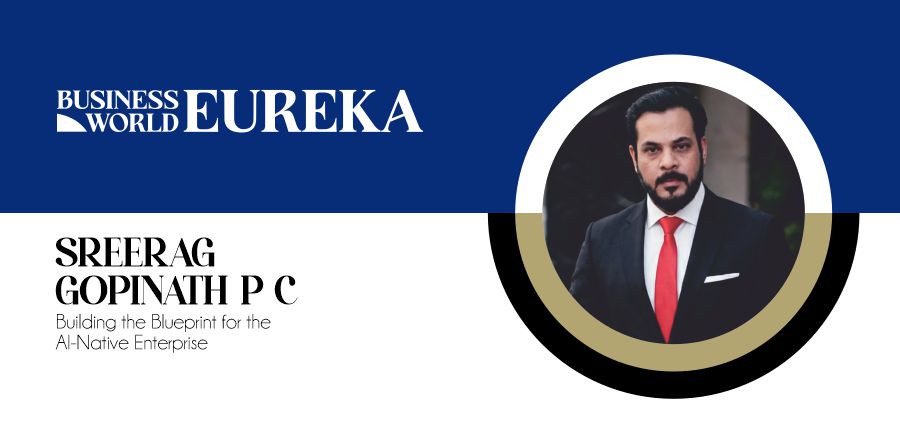
Bringing this philosophy to life is Sreerag Gopinath P C, Executive Chairman, CEO, and Founder of SRG, who is building an AI-first, AI-native enterprise designed to challenge conventional models of organizational growth. Through intelligent platforms such as SRG Enterprise-Next, integrated leadership across strategy, technology, product, and operations, and a culture that gives experimentation both freedom and accountability, Sreerag is transforming AI from an isolated business tool into the connective intelligence of the enterprise.
While many organizations approach artificial intelligence as an additional layer within existing systems, SRG was founded on a fundamentally different premise. From its inception, AI was envisioned not as a supporting technology but as the foundation upon which the organization would operate, innovate, and scale.
For Sreerag, this decision emerged from a clear understanding of the challenges that accompany organizational growth. As businesses expand, systems can evolve faster than human judgment, while execution often becomes fragmented across disconnected teams, technologies, and processes. Rather than adapting conventional infrastructure to accommodate emerging intelligence, he envisioned an enterprise where intelligence would be embedded at the core from day one.
“Artificial intelligence is not merely a tool at the edge of our operations; it is the native language of our business,” Sreerag explains.
By building SRG as an AI-first and AI-native organization, he sought to move beyond the limitations associated with gradual technology integration. The result is an ecosystem designed to support autonomous operations, accelerated growth, proactive decision-making, and greater operational velocity.
Within this model, data is viewed not simply as a source of retrospective analysis but as a strategic compass capable of connecting long-term vision with real-time execution. Intelligent systems enable the organization to anticipate challenges, identify opportunities, and continuously refine how value is created.
At the centre of this vision is a commitment to expanding human capability. By allowing intelligent technologies to manage increasing levels of operational complexity, SRG creates greater space for people to pursue creativity, strategic thinking, and disruptive innovation.
“Our purpose is not to limit human involvement but to amplify what human ingenuity can achieve,” he says.
As Executive Chairman, CEO, and Founder, Sreerag leads across strategy, technology, product development, and operations. Rather than treating these responsibilities as separate leadership domains, he approaches them as interconnected components of a unified enterprise ecosystem.
Technology architectures and product roadmaps are developed in alignment with long-term business objectives, while operational performance is closely connected to broader innovation and product milestones. This integration allows strategic ambition to remain grounded in execution while ensuring that everyday decisions contribute to SRG’s larger direction.
“Strategy, technology, product, and operations cannot function as isolated disciplines when the objective is to build an enterprise capable of sustainable scale,” Sreerag observes.
Maintaining coherence across these areas requires the ability to move between long-term vision and immediate operational priorities. Sreerag describes this as a balance between macro-level orientation and micro-level execution, understanding the wider direction of the organization while remaining connected to the systems that translate ideas into measurable outcomes.
A significant part of this approach involves codifying successful practices. Rather than allowing knowledge or execution capability to remain dependent on individual leaders, SRG converts repeatable breakthroughs into structured frameworks, proprietary methodologies, and scalable organizational assets.
The organization also relies on specialized, cross-functional initiative “Tribes” that bring together diverse capabilities around shared objectives. By distributing ownership and accountability across these collaborative teams, SRG enables leadership to retain a long-term perspective while allowing focused groups to advance key initiatives.
Artificial intelligence strengthens this model by helping manage operational complexity and improve data-driven predictability. As intelligent systems assume greater responsibility for coordination and analysis, leadership can dedicate more attention to strategic direction, creative exploration, and future growth.
Sreerag believes the next five years will mark a decisive transition for Generative AI. Rather than functioning primarily as a tool for accelerating individual tasks, it will increasingly become part of the underlying architecture through which organizations operate.
“The next phase of Generative AI will not be defined only by what it can create, but by how deeply it can connect intelligence with enterprise execution,” he says.
Among the areas expected to experience the greatest transformation are business operations and systemic governance. Traditional automation has generally focused on improving predefined, linear processes. The next stage will involve autonomous and self-optimizing ecosystems capable of anticipating bottlenecks, reallocating resources, coordinating complex workflows, and connecting strategic priorities with execution in real time.
Product engineering and creative design will undergo an equally significant evolution. Generative technologies will compress conventional development cycles, enabling organizations to move from early concepts to functional prototypes with greater speed. At the same time, the convergence of creative expression and advanced technology will allow brands to deliver increasingly personalized experiences and visual narratives across larger audiences.
Sreerag also sees strategy and advanced analytics entering a new phase. As AI enables organizations to interpret information dynamically, leaders will gain access to sophisticated scenario modelling and predictive insights capable of responding to changing markets and global conditions.
“Data can no longer remain a static reporting index. It must become a live strategic compass,” he emphasizes.
For Sreerag, however, the defining story of this transformation is not one of human replacement. Its greater value lies in amplification. By reducing operational complexity and extending analytical capabilities, Generative AI can enable people to devote more energy to imagination, strategic judgment, and the creation of new possibilities.
SRG’s expanding portfolio, including the SRG Enterprise-Next SaaS platform, reflects a product philosophy centred on building capabilities that redefine rather than merely improve existing enterprise systems.
For Sreerag, innovation is not a linear journey from idea to market. It is an ongoing process that brings together strategic foresight, cognitive architecture, rapid experimentation, advanced engineering, and purposeful design.
“We do not build technology simply to close operational gaps. We build to redefine the baseline of what an enterprise can achieve,” he explains.
Every product concept begins at the intersection of long-term organizational needs and emerging market opportunities. Artificial intelligence is embedded within the architecture from the beginning, allowing SRG’s platforms to support proactive decisions, continuous learning, and adaptive innovation.
Ideas are then subjected to structured prototyping and hypothesis validation. Through agile methodologies, design sprints, opportunity mapping, and continuous feedback, teams evaluate product-market relevance early in the development journey. This enables SRG to identify potential limitations before they affect scale while converting successful approaches into repeatable systems.
Another defining element of the strategy is the integration of functionality with design. Sreerag rejects the assumption that enterprise software must be visually restrained or difficult to engage with. By bringing together “Imagineers,” scientists, designers, and technology specialists, SRG aims to develop interfaces that simplify complex processes while creating intuitive and compelling user experiences.
Despite growing investment in digital transformation, Sreerag observes that many organizations continue to approach technology as a collection of isolated solutions. New tools are often added to legacy infrastructure without addressing the structural limitations beneath existing operations.
According to him, one of the most common mistakes is positioning AI at the periphery of the organization and using it solely to improve individual processes. Although this may generate short-term efficiency, it rarely creates the coherence required for sustainable transformation.
“Scale does not collapse because ambition becomes too great. It collapses when execution fragments and systems evolve faster than organizational alignment,” Sreerag notes.
A tool-centric approach can create additional complexity when technologies operate independently across disconnected teams and workflows. To build a more sustainable roadmap, he believes organizations must move toward an AI-first mindset in which intelligence becomes an integrated part of enterprise-wide decision-making and execution.
This begins by establishing a native foundation where intelligent capabilities connect workflows rather than merely optimize isolated activities. Strategy must then become closely aligned with agile and iterative execution, allowing organizations to respond to new information without losing sight of long-term objectives.
Sreerag also emphasizes the importance of codifying success. Operational breakthroughs should be converted into repeatable frameworks and organizational assets capable of supporting future growth. When intelligence, structural discipline, and creativity operate together, businesses can move beyond fragmented transformation initiatives and develop capabilities that remain relevant as markets evolve.
Despite growing investment in digital transformation, Sreerag observes that many organizations continue to approach technology as a collection of isolated solutions. New tools are often added to legacy infrastructure without addressing the structural limitations beneath existing operations.
According to him, one of the most common mistakes is positioning AI at the periphery of the organization and using it solely to improve individual processes. Although this may generate short-term efficiency, it rarely creates the coherence required for sustainable transformation.
“Scale does not collapse because ambition becomes too great. It collapses when execution fragments and systems evolve faster than organizational alignment,” Sreerag notes.
A tool-centric approach can create additional complexity when technologies operate independently across disconnected teams and workflows. To build a more sustainable roadmap, he believes organizations must move toward an AI-first mindset in which intelligence becomes an integrated part of enterprise-wide decision-making and execution.
This begins by establishing a native foundation where intelligent capabilities connect workflows rather than merely optimize isolated activities. Strategy must then become closely aligned with agile and iterative execution, allowing organizations to respond to new information without losing sight of long-term objectives.
Sreerag also emphasizes the importance of codifying success. Operational breakthroughs should be converted into repeatable frameworks and organizational assets capable of supporting future growth. When intelligence, structural discipline, and creativity operate together, businesses can move beyond fragmented transformation initiatives and develop capabilities that remain relevant as markets evolve.
As AI capabilities become increasingly powerful, Sreerag believes innovation must advance alongside responsible governance, cybersecurity, transparency, and ethical accountability.
At SRG, responsible AI is treated as an essential component of technology architecture rather than an external requirement introduced after development. Ethical considerations are incorporated into the design and deployment process, with attention given to data privacy, algorithmic fairness, transparency, and responsible decision-making.
“Innovation cannot exist independently of responsibility. The systems shaping the future must also earn the trust required to sustain it,” Sreerag says.
This philosophy is supported by a layered governance approach. Ethical principles are embedded within the organization’s technology and product frameworks, enabling potential risks to be identified before systems reach operational environments.
Cybersecurity follows a similarly proactive model. As AI-first ecosystems become increasingly interconnected, Sreerag believes organizations must move beyond reactive defence. Security engineering must evolve alongside product architecture, supported by intelligent threat analysis and systems capable of identifying vulnerabilities with greater speed.
Cross-functional initiative “Tribes” and specialized leadership functions contribute an additional layer of oversight. Product initiatives are evaluated throughout their development against regulatory expectations, ethical considerations, operational risks, and global compliance requirements.
Within SRG’s network-driven organizational model, strategic partnerships are viewed as more than transactional arrangements. Sreerag sees collaboration as an opportunity to combine complementary strengths, extend innovation capabilities, and create value that neither organization could achieve independently.
“Long-term partnerships are not built around immediate advantage. They are built around a shared understanding of where the future can be created together,” he explains.
The first quality he seeks is strategic alignment. Potential collaborators should possess a long-term perspective and a willingness to move beyond established industry benchmarks. Rather than focusing exclusively on short-term growth, strong partners share an ambition to build future-ready capabilities and explore new possibilities.
Complementary expertise is equally important. SRG values organizations that contribute distinctive capabilities to its products, methodologies, or broader ecosystem. However, vision must be accompanied by execution. Sreerag looks for collaborators capable of translating ambitious ideas into scalable and operationally viable outcomes.
Trust remains the foundation connecting these qualities. In uncertain markets, resilient partnerships depend on transparency, accountability, disciplined risk management, and a shared commitment to data security.
“Trust compounds beyond the boundaries of formal agreements,” Sreerag says. “It allows organizations to remain aligned even when circumstances change.”
Through partnerships built on strategic compatibility, complementary capabilities, and mutual confidence, SRG seeks to create collaborative ecosystems positioned to generate enduring value.
Sreerag describes himself as a “Full-Stack Executive,” a leadership identity shaped by his experience across multiple CXO functions. Operating at the intersection of strategy, technology, product, operations, design, and cybersecurity has given him a multidimensional perspective on organizational decision-making.
Traditional leadership structures can sometimes encourage functional separation, with decisions evaluated primarily through the priorities of individual departments. Sreerag’s cross-functional approach enables him to consider the enterprise as an integrated system rather than a collection of independent units.
“Leadership changes when the organization is viewed as a connected whole rather than through isolated functional lenses,” he explains.
Strategic decisions are assessed alongside their technological requirements, operational implications, product potential, security considerations, and long-term scalability. This broader perspective allows emerging risks and execution challenges to be identified earlier while ensuring that innovation remains connected to organizational viability.
Full-stack leadership also enables a closer relationship between vision and implementation. High-level ambitions can be translated into specific architectures and operational priorities without losing their original intent.
As cloud-first architecture, SaaS platforms, and artificial intelligence become increasingly central to enterprise growth, organizations face the challenge of modernizing without destabilizing the operations on which they depend.
Sreerag believes successful modernization requires more than replacing existing technologies. It demands a structured evolution of enterprise capability, supported by clear strategic alignment and carefully managed implementation.
“Modernization should expand organizational capability without creating unnecessary friction within the systems that sustain the business,” he says.
The first priority is establishing an AI-native foundation. Rather than attaching intelligent tools to isolated legacy processes, organizations should gradually position intelligence as a connecting layer across workflows, data, and decision-making.
The second is aligning the strategy with iterative execution. Large-scale transformation programmes can become vulnerable when planning and implementation operate independently. Cross-functional teams and phased deployment models allow organizations to introduce cloud and SaaS capabilities progressively, evaluate outcomes, and adapt without placing business continuity at unnecessary risk.
Finally, modernization must be supported by systemic coherence and resilience. Successful processes should be documented and converted into scalable organizational frameworks, while cybersecurity must remain embedded throughout every stage of technology design and migration.
Innovation requires organizations to explore possibilities whose outcomes cannot always be predicted. At SRG, Sreerag seeks to transform uncertainty from an unmanaged risk into a structured source of opportunity.
This philosophy is embodied in what he describes as the “Strategic Playground”—an environment where experimentation can flourish without compromising the stability of core operations.
“Experimentation becomes sustainable when creativity is given freedom within a structure that protects accountability,” he explains.
Dedicated cross-functional initiative “Tribes” bring together “Imagineers,” technology architects, strategists, and specialists to prototype ideas, test assumptions, and evaluate emerging concepts. These initiatives operate within focused environments that allow teams to identify failures early, learn quickly, and reduce the cost associated with uncertainty.
Accountability is maintained through clearly defined success measures. Insights generated through experimentation are documented and converted into repeatable frameworks, ensuring that valuable learning becomes part of the organization’s collective capability.
Projects are evaluated against strategic relevance, opportunity potential, cost discipline, operational viability, cybersecurity expectations, and long-term value. This creates a balance in which bold thinking can coexist with measurable responsibility.
Specialized governance functions further strengthen the model by ensuring alignment across AI, technology, project execution, risk, and organizational strategy.
While Generative AI continues to transform industries, Sreerag believes the next decade will be shaped by technologies capable of moving beyond content creation toward autonomous reasoning, interconnected execution, and advanced computational intelligence.
Among the most significant developments will be Agentic AI and cognitive swarm intelligence. Decentralized networks of intelligent agents may increasingly coordinate complex tasks, communicate across enterprise systems, and make autonomous decisions in pursuit of shared organizational objectives.
“The future will belong to intelligent ecosystems capable not only of responding to human direction but of coordinating action across entire value chains,” Sreerag predicts.
These technologies might revolutionize fields like supply chain management, resource management, operational planning, and decision-making within organizations by helping overcome obstacles and coordinating efforts with minimal human involvement.
Another area that might be radically changed is quantum computing, especially when combined with sophisticated AI systems. According to Sreerag, new computational abilities will allow companies to resolve problems of optimization and do simulations in the rapidly changing market environment.
The spatial technology might revolutionize the way people use computers as well because it would help create virtual and immersive worlds able to link the physical and virtual world.
In addition, cybersecurity needs to be radically transformed because autonomous and distributed enterprise ecosystems would require defensive systems with self-learning and self-healing properties. Using cryptography and autonomous threat detection, companies would be able to recognize and eliminate possible weaknesses in their systems.
As SRG grows worldwide, the future goal of Sreerag is about more than just the expansion of the organization. He wants to provide something innovative that enables companies to incorporate intelligence, link strategy with execution, and achieve greater human potential.
“Our legacy should not be about the technology that we create but about the possibilities created through our technology,” he remarks.
The fundamental principle underlying this future goal is the assumption that the future enterprise would be built on artificial intelligence (AI). Intelligence would no longer be limited to being a separate component but would link together all decisions, processes, products, and operations in the dynamic ecosystem of the future enterprise.
The platforms that SRG builds such as SRG Enterprise-Next seek to bring about closer integration of strategy with execution in order to overcome the old gap between the two.
Yet technology represents only one dimension of the legacy he hopes to build. The larger objective is to redefine the relationship between intelligent systems and human capability.
With less administrative burden and fewer obstacles, AI enables the creation of a broader scope for leaders and teams to dream, envision, question, and explore.
“After all, the endgame of intelligence is about expanding the horizons of human possibilities,” says Sreerag.
With its innate AI architecture, innovative ecosystem, enterprise platforms, and emphasis on robust digital solutions, SRG seeks to enable organizations to transcend conventional approaches and set new standards of performance.
Sreerag sees the future of enterprise transformation to be about much more than adopting better technologies. It is going to be about how well organizations combine intelligence with imagination, autonomy with accountability, and progress with ambition.
This, says Sreerag, is what he intends to leave as a legacy of SRG, contributing not just to the future of enterprise evolution, but also to the architecture that makes it possible.
“We did not build SRG around AI as a tool. We built an AI-native enterprise where intelligence serves as the foundation for how we operate, innovate, and scale.”
“I believe operational scale begins to fracture when systems grow faster than human judgment and execution becomes disconnected across teams and technologies.”
“For us, AI is not an additional layer within the enterprise. It is the native language connecting strategy, data, innovation, and execution.”