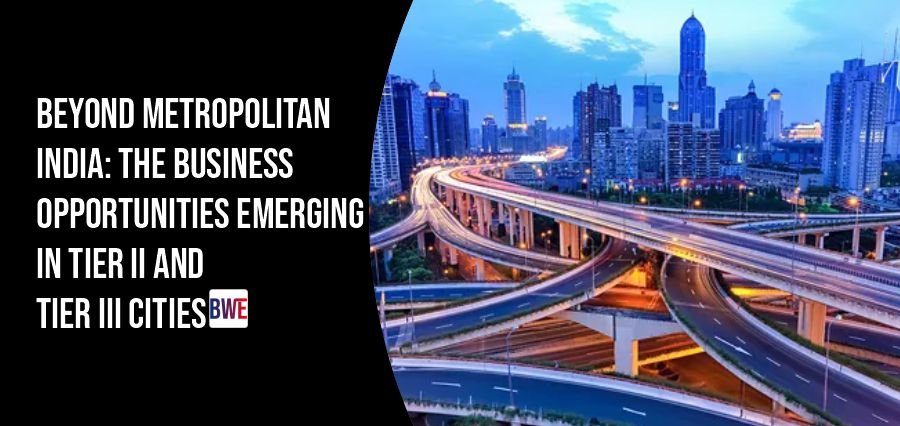
For decades, India’s biggest business ambitions have gravitated towards Mumbai, Delhi, Bengaluru, Hyderabad, and other major metropolitan centres. These cities offered access to capital, established infrastructure, skilled professionals, and large consumer markets. However, an important shift is changing the geography of Indian enterprise. Increasingly, businesses are looking beyond metropolitan boundaries to discover opportunities in smaller cities, where rising aspirations, expanding digital access, and evolving consumer behaviour are creating new avenues for growth.
From Indore and Coimbatore to Surat, Jaipur, Lucknow, and Bhubaneswar, Tier II and Tier III cities are becoming important destinations for investment and entrepreneurship. Their appeal extends beyond lower operating costs. These markets offer businesses opportunities to reach underserved customers, develop regional talent, establish new supply chains, and build products and services around local needs. For business leaders, the question is no longer whether smaller cities deserve attention, but how to participate in their growth without overlooking the complexities of operating in diverse markets.
A Different Kind of Consumer Opportunity
One of the strongest drivers of this shift is the changing consumer landscape. Rising incomes, greater smartphone adoption, digital payments, and access to online marketplaces have expanded the range of products and services available to consumers outside major cities.
Customers in smaller urban centres increasingly seek quality education, organised retail, modern healthcare, financial services, convenient delivery, and technology-enabled products. Their expectations are evolving, but their preferences cannot always be understood through the lens of metropolitan consumption.
For businesses, this creates an opportunity to develop more targeted strategies. A retail company may find demand for organised shopping experiences, while an education provider may discover an unmet need for vocational training and professional courses. Healthcare groups can explore accessible diagnostic services, and financial technology companies can design solutions for customers who remain underserved by traditional systems.
The advantage belongs to businesses that understand the specific market rather than simply replicating a metropolitan model. Pricing, language, distribution, customer support, and product design must reflect local realities. Growth becomes more sustainable when companies solve problems that customers genuinely experience.
Digital Infrastructure Is Changing the Equation
Technology has reduced several barriers that once restricted business growth to major cities. Digital payments simplify transactions, e-commerce platforms expand market reach, and cloud-based systems allow companies to manage operations across geographically dispersed locations.
For entrepreneurs, this means a business can increasingly be built in a smaller city while serving customers across India and, in some cases, international markets. Software companies, digital agencies, online education providers, and specialised service businesses can access customers without requiring a large metropolitan presence.
Digital infrastructure also creates opportunities for traditional businesses. Local manufacturers can reach new buyers through online channels, regional retailers can improve inventory management, and service providers can use digital platforms to strengthen customer relationships.
Regional Talent and Entrepreneurship
Smaller cities are also important sources of entrepreneurial ambition and professional talent. Local knowledge can help founders identify problems that larger companies may overlook, while proximity to communities can provide a clearer understanding of customer expectations.
At the same time, companies expanding into these markets can create employment opportunities beyond traditional metropolitan centres. Technology services, manufacturing, logistics, healthcare, education, and professional services can support the development of new career pathways.
For business leaders, the opportunity extends beyond recruitment. Establishing operations in emerging cities can help develop local management capabilities, strengthen supplier networks, and create a broader base of economic participation.
However, talent development requires sustained investment. Organisations must provide training, clear career progression, competitive working conditions, and leadership opportunities. Without these measures, businesses may struggle to retain skilled employees or build teams capable of supporting long-term expansion.
Infrastructure, Partnerships and the Road Ahead
The commercial potential of smaller cities depends partly on the quality of their supporting infrastructure. Roads, rail connectivity, reliable electricity, telecommunications, industrial facilities, and efficient public services can influence how quickly businesses scale.
Public investment and private-sector participation can help strengthen these foundations. Partnerships with local enterprises, educational institutions, industry associations, and government bodies can also help companies understand regulatory requirements, identify talent, and establish stronger community relationships.
Looking Beyond the Familiar Map
India’s next phase of business growth will not be determined exclusively by what happens in its largest cities. Smaller urban centres are creating opportunities for companies willing to understand their customers, invest in local capabilities, and build operations suited to regional conditions.
For visionary business leaders, the opportunity is not simply to reduce costs by moving beyond metropolitan boundaries. It is to recognise new sources of demand, develop talent where it exists, and create businesses that contribute to the economic strength of a wider range of communities.
The companies that succeed will combine national ambition with local understanding. They will use technology to extend their reach, disciplined investment to manage risk, and meaningful partnerships to establish credibility.