A city can survive traffic, power outages, and even economic slowdowns. What it cannot survive is the silent absence of water. Long before skylines rise, industries expand, or communities flourish, there is an invisible network carrying life beneath the surface. Every glass filled, every factory running, every hospital functioning, and every household beginning its day depends on a resource so fundamental that it is often noticed only when it is missing. As populations grow and climate pressures intensify, water is no longer simply a utility. It has become one of the defining pillars of public health, economic stability, and sustainable development. The challenge is no longer just about securing water supplies. It is about creating systems that can deliver reliability, efficiency, and resilience for decades to come.
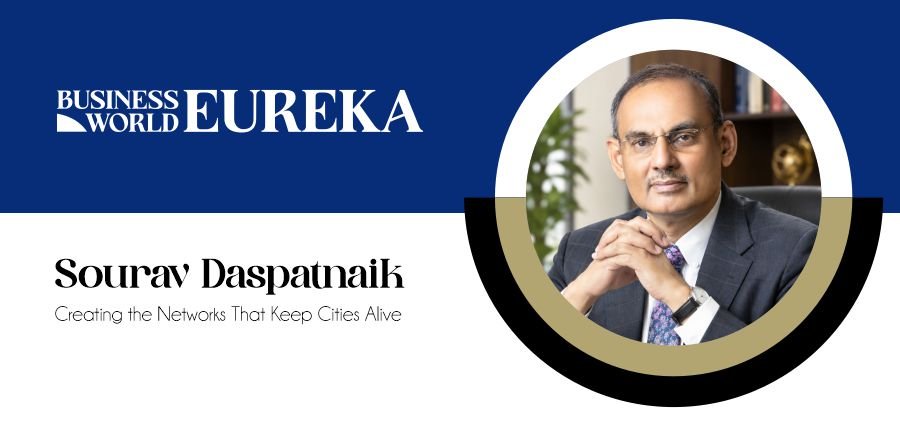
As the Founder Director of Maa Ganges Water Tech Pvt Ltd and Former Managing Director of Swach Environment Ltd. and its subsidiaries, Haldia Water Services Pvt Ltd and Nangloi Water Services Pvt. Ltd., Sourav Daspatnaik has spent years addressing precisely these challenges. His professional journey has taken him from Steel manufacturing, sanitation and public health initiatives to the leadership of large-scale water utility operations, providing him with a comprehensive understanding of the sector’s opportunities and constraints. His stewardship in the area of Environment especially Material circularity, vamortization of waste and byproducts in the metal sector, brings unique skill sets together.
A Purpose Rooted in Public Health and Value creation from waste
Sourav’s journey into the water and environmental sector evolved through his work in sanitation. Beginning in 2008, he witnessed firsthand how sanitation remained one of the most neglected aspects of public health across both urban and rural India. His professional exposure extended beyond the country, taking him to several South Asian and African nations where he encountered similar challenges related to access to safe drinking water and sanitation.
His involvement with the Government of India’s Swach Bharat Mission from 2014 further strengthened his understanding of the relationship between sanitation and water. He came to recognize that the success of sanitation initiatives depends heavily on the availability of clean water for drinking and human consumption. Having grown up in India, he observed both the deep cultural reverence for water and the daily struggles faced by communities in securing reliable access to it. These experiences shaped his belief that water is one of the few sectors where engineering, environmental sustainability, and human dignity intersect. The opportunity to create an impact that lasts for generations, rather than merely delivering short-term outcomes, became the driving force behind his commitment to the sector.
His background with Steel sector starting with Tata Steel at Jamshedpur helped in understanding the value chain, especially emerging standards reruirements of water footprint, carbon emission and valorization of waste and by products in steel sector.
Redefining Sustainable Water Management
Over the years, Sourav’s perspective on sustainable water management has undergone a significant transformation. During his work with government and public health sectors, the focus was largely centered on infrastructure development, with considerable investment directed toward treatment facilities and less emphasis on equitable distribution systems.
His subsequent experience leading operations for private water utilities shifted his perspective toward performance-driven outcomes. Today, he believes that sustainable water management rests on three fundamental pillars: reducing Non-Revenue Water, ensuring the financial sustainability of public utilities, especially water and sewerage and building climate resilient infrastructure. In his view, a treatment facility that cannot sustain itself operationally and financially cannot truly be considered sustainable. He also emphasizes the need for regular rejuvenation and modernization of public health infrastructure to keep pace with growing demands and evolving challenges.
The Blueprint for Successful Public Private Partnerships
Sourav views successful Public-Private Partnership models as being founded on collaboration rather than transactional relationships between public authorities and private operators. According to him, the effectiveness of these partnerships depends on a balanced and equitable sharing of responsibilities, risks, and rewards.
He identifies five critical factors that determine the success of PPP projects. The first is the presence of a clearly defined risk-sharing framework. The second is a transparent and financially viable contractual structure. The third involves political and administrative continuity that ensures projects remain unaffected by leadership transitions. The fourth is a strong emphasis on customer service and community engagement. The fifth is a performance-linked return structure that aligns incentives with long-term outcomes.
In his view, PPPs achieve their full potential when both public and private stakeholders recognize their shared responsibility as service providers to citizens rather than operating as opposing parties.
India’s Water Agenda for the Next Decade
Looking ahead, Sourav believes India must move beyond a project-based approach and adopt a service-oriented mindset in managing its water resources. While initiatives such as Jal Jeevan Mission and AMRUT have successfully expanded access, the next phase must focus on ensuring quality, continuity, and long-term sustainability.
He identifies several urgent priorities. One of the most significant is reducing non-revenue water levels from the current range of forty to fifty per cent to below fifteen per cent. Universal metering and efficient distribution management will play a key role in achieving this goal. Another priority is achieving complete wastewater recycling and reuse for industrial and non-potable applications, reducing pressure on freshwater sources.
Climate resilience is equally important. Sourav advocates for comprehensive aquifer mapping, groundwater rejuvenation, and long-term source sustainability measures. He also sees digital transformation as essential for enabling utilities to make real-time decisions and improve operational efficiency. Together, these priorities will define India’s water infrastructure agenda over the coming decade.
Balancing Efficiency, Ecology, and Equity
When managing large-scale projects, Sourav follows what he describes as the Triple E principle: Efficiency, Ecology, and Equity.
Efficiency is achieved through robust operational practices, including preventive maintenance, automation, and standardized operating procedures. These measures help optimize performance while minimizing operational disruptions.
Ecology focuses on environmental responsibility. This includes exceeding regulatory compliance standards related to discharge quality and energy consumption. Significant investments in energy-efficient pumps, electrical upgrades, and improved power factors contribute to reducing environmental impact while improving operational performance.
Equity ensures that local communities derive tangible benefits from infrastructure projects. Whether through employment opportunities, improved service delivery, or access to community water kiosks, projects must create meaningful social value. Sourav believes that if any initiative fails to satisfy one of these three dimensions, it requires reassessment and redesign to ensure balanced and sustainable outcomes.
The Technologies Reshaping Water Management
Technology, in Sourav’s view, is no longer merely a supporting tool but has become the foundation of modern water management. He believes three innovations will fundamentally transform the sector in the coming years.
The first is the adoption of Internet of Things technologies and Digital Twins within water distribution systems. These technologies provide real-time visibility into network pressure, water quality, leakages, and operational performance, enabling more effective decision-making.
The second involves low-energy membrane technologies and nature-based treatment solutions. These innovations have the potential to significantly reduce operating costs while improving treatment efficiency and sustainability.
The third is the use of artificial intelligence for demand forecasting, consumption analysis, and smart billing. By helping utilities better understand consumer behavior and anticipate future demand patterns, AI-driven systems can improve resource allocation while encouraging more responsible water usage.
For Sourav, technological advancement is not simply enhancing water management. It is redefining how utilities operate and serve communities.
Building Trust Across Stakeholders
One of the most important lessons Sourav has learned throughout his career is that trust cannot be built solely through strategy or communication plans. It is earned through transparency, consistency, and meaningful engagement.
He recognizes that different stakeholders bring different expectations. Governments seek reliability and accountability. Investors focus on returns and sustainability. Communities prioritize dignity, accessibility, and quality service. Regulators require compliance and transparency.
To align these diverse interests, Sourav places significant emphasis on listening. He believes that spending time in the field and engaging directly with stakeholders often yields greater insights than boardroom discussions alone. Transparent sharing of operational data and performance metrics further strengthens credibility and trust.
In his experience, alignment naturally follows when stakeholders recognize a genuine commitment to long-term service and public value.
Projects That Delivered Meaningful Change
Among the many projects Sourav has been associated with, Nangloi Water Services holds particular significance. Serving more than one million residents in West Delhi, the project represented an opportunity to transform a system characterized by high Non-Revenue Water and intermittent supply into a more reliable and customer-focused utility.
The improvements achieved through the project extended beyond technical performance indicators. Reliable access to water significantly improved the quality of life for many residents, particularly women who previously spent considerable time waiting for water deliveries or managing storage requirements. For Sourav, these changes represented the true measure of success.
Another milestone was Haldia Water Services Pvt Ltd, which demonstrated how industrial water supply could be delivered sustainably while supporting economic development. The project showcased the importance of combining operational efficiency with environmental responsibility to create long-term value for both industries and communities.
Making Sustainability a Business Advantage
Sourav firmly rejects the notion that sustainability and profitability exist in opposition to one another. Instead, he views sustainability as a critical driver of long-term financial performance.
Operational improvements such as reducing energy consumption, optimizing chemical usage, and expanding water reuse create measurable economic benefits while simultaneously enhancing environmental outcomes. These efficiencies directly contribute to profitability and organizational resilience.
He advocates for integrating Environmental, Social, and Governance considerations into core business strategy rather than treating them as separate initiatives. For private water utilities in particular, every project proposal should clearly demonstrate both financial returns and sustainability benefits. This integrated approach ensures that growth and responsibility reinforce rather than undermine one another.
Leadership Anchored in Patience and Integrity
Throughout his career, three leadership principles have consistently guided Sourav’s decision-making.
The first is patience combined with persistence. Water infrastructure projects often span decades, making it essential to adopt a long-term perspective rather than focusing solely on short-term results.
The second principle is a people-first philosophy. He believes that operators, engineers, and field teams form the foundation of every successful utility. Supporting and empowering these individuals ultimately strengthens organizational performance and service delivery.
The third principle is integrity. Given the direct impact of water infrastructure on public health and safety, shortcuts can have serious consequences. Sourav has consistently prioritized doing what is right over what is easy, even when difficult decisions are required.
Together, these principles have shaped both his leadership approach and the organizations he has helped build.
Why Water Security Will Define Future Growth
Sourav believes water security will become one of the most important determinants of economic development, industrial growth, and urban expansion over the next decade.
He anticipates that water audits will eventually become as commonplace as financial audits for industries. Access to reliable water resources will increasingly influence decisions about where businesses invest, where cities expand, and where long-term economic growth occurs.
Cities that fail to incorporate water security into their planning frameworks risk facing stagnation and declining competitiveness. Water security can no longer be viewed solely as an environmental concern. In Sourav’s assessment, it has become an economic and national security priority.
With more than half of India’s population expected to live in urban areas in the future, planners must focus on developing climate-resilient infrastructure capable of meeting growing demand while protecting critical water resources.
A Vision for India’s Private Water Utilities
Looking ahead, Sourav envisions a transformative role for private water utilities in India. He believes the sector has an opportunity to bring greater efficiency, innovation, and reliability to public infrastructure while operating assets that serve millions of citizens.
Unlike sectors such as power, highways, and transportation, the Public-Private Partnership model in water remains relatively underdeveloped in India. He sees significant potential for growth as utilities move beyond traditional Engineering, Procurement, and Construction mindsets toward roles centered on innovation, service delivery, and customer experience.
His vision includes expanding twenty-four-hour water supply systems, universal smart metering, reducing Non-Revenue Water across major cities, and making safe drinking water from the tap a reality for millions. He also advocates for the widespread adoption of circular water systems where reuse and recycling become standard practice rather than exceptions.
Ultimately, Sourav hopes to see India’s leading cities develop highly efficient water networks that combine reliability, sustainability, and customer-centricity. Beyond infrastructure, however, he hopes to leave behind water-secure communities and inspire a new generation of water professionals dedicated to advancing the sector. For him, that would represent a legacy truly worth cherishing.
From Industrial By-Products to Valuable Resources
The next chapter of industrial sustainability may be shaped by how effectively businesses recover value from materials they have traditionally treated as waste. In the steel industry, slag recovery is emerging as an important area of opportunity, connecting resource efficiency with material circularity, environmental responsibility and new revenue streams.
Steel slag, generated during steelmaking, already finds applications in road construction, aggregates, cementitious materials and land reclamation. However, unrecovered metals, inconsistent material quality and limited high-value applications continue to restrict its full potential. The immediate priority is to improve metallic recovery through advanced crushing, screening, magnetic separation and automated sorting systems. Recovering more iron can reduce raw-material consumption while lowering the volume of material sent to landfills.
Between 2028 and 2030, the projected evolution of slag recovery points towards greater use of recovered materials in low-carbon cement, concrete aggregates, railway ballast and other construction applications. This could enable steelmakers to develop revenue streams from recovered materials rather than treating slag management solely as a disposal responsibility.
Digital technologies are expected to play an increasingly important role between 2030 and 2032. AI-assisted quality prediction, real-time chemical analysis and digital product records could help establish consistent specifications, making recovered slag more suitable for specialised industrial applications.
The subsequent phase, projected for 2032–2035, could see steel slag incorporated into carbon capture strategies. Through mineral carbonation, calcium- and magnesium-rich compounds can react with carbon dioxide, creating the potential for longer-term carbon storage. Beyond 2035, recovering additional minerals, including vanadium, chromium, manganese and titanium where economically viable, could open further opportunities. The commercial feasibility of these applications will depend on material composition, processing costs and market demand.
By 2040, the base-case scenario envisages advanced steel plants operating integrated recovery systems that combine metallic recovery, construction material production and specialised mineral extraction. Leading facilities could achieve productive utilisation of more than 95% of generated slag, although this remains a forward-looking projection rather than a guaranteed outcome.
For industrial leaders, the broader implication is clear: circularity can become a source of business value when supported by appropriate technology, viable markets and disciplined resource management. As Sourav’s professional background spans steel manufacturing and environmental sustainability, this transition provides a relevant perspective on the growing relationship between industrial efficiency, material recovery and long-term environmental responsibility.