
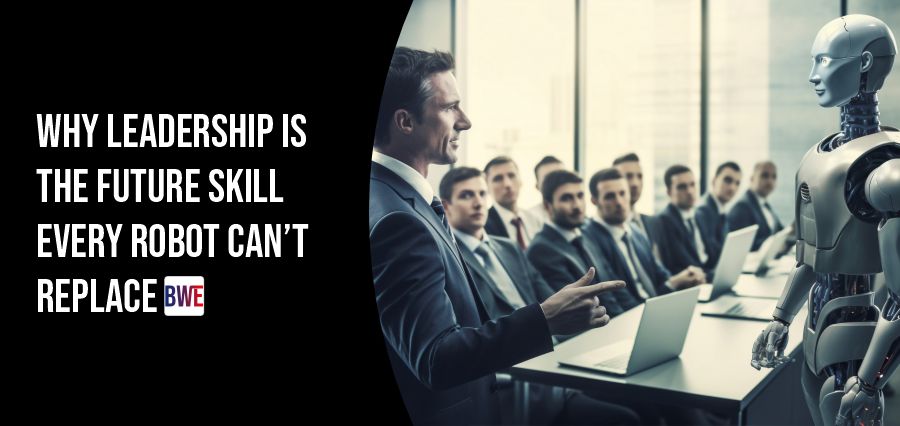
Leadership is not a buzzword. It is a foundational human skill that machines, no matter how advanced, cannot truly replicate. As automation and artificial intelligence reshape industries, leadership stands out as an enduring skill that will anchor the future of work. This article breaks down why leadership matters, how it has evolved, and why it remains uniquely human.
Automation and artificial intelligence are transforming the workplace at an unprecedented pace. Technologies are taking over tasks that were once the domain of humans, from repetitive manufacturing processes to basic data analysis. Research shows that machines are increasingly present across industries, yet they handle structured and predictable tasks far more than relational or complex human interactions.
One influential study by Carl Benedikt Frey and Michael Osborne found that up to 47 percent of existing jobs could be susceptible to automation. Their point was not to declare the end of human work, but to highlight that many routine tasks are at risk, pushing humans to focus on where they add unique value.
This shift is clear in Work 4.0, a framework that examines how employment will change by 2030 and beyond. It shows that as digitalization spreads, automation will handle predictable and repetitive tasks, while human roles will need deeper social and strategic skills.
At its core, leadership is about guiding people, not just managing tasks. Machines excel at processing information but fall short when it comes to empathy, intuition, and moral judgment. Those capabilities are not programmable in any meaningful way.
Studies show that skills such as emotional intelligence, communication, and strategic thinking are becoming more important, even as automation expands. Demand for these social and emotional skills, including leadership and management, is set to grow because machines cannot genuinely replicate them.
Leadership is about setting direction, energizing people, and fostering collaboration. It depends on trust, influence, and shared meaning. None of these emerge simply from data or algorithms. Machines can suggest decisions based on patterns, but they cannot inspire. They cannot empathize with a stressed employee or rally a team around a mission.
Humans have always worked in groups, but the nature of leadership has changed. Long before the modern workplace, leadership was a survival mechanism. Early social groups needed individuals who could coordinate hunting, resolve conflicts, and guide migrations. This is not just theory, it is supported by evolutionary leadership theory, which argues that leadership evolved as a human adaptation to social challenges.
In the industrial era, leadership took on new forms as organizations became bigger and more structured. The role centered around planning, delegation, and coordination. Through the information age, leadership expanded to include strategic thinking and organizational culture. Now, in the age of AI, leadership must blend traditional human strengths with technological savvy.
Here is the thing: sophisticated tools augment human work rather than replace it entirely. A World Economic Forum report highlights that while technological change will reconfigure jobs, it will also increase demand for leadership and tightly linked human-centered skills like empathy and social influence.
AI can support leaders with more data and faster insights, but it still lacks qualities that define human leadership. Machines cannot understand human motivations or manage ethical dilemmas the way humans can. They cannot build trust or navigate cultural nuances.
Consider this: when AI and humans work together, leaders are the ones who decide how that collaboration happens. They set priorities, interpret results, and create shared goals. The technical capabilities of AI are tools. Leadership turns those tools into human impact.
Emotional intelligence will continue to be a central differentiator. Research and expert articles list skills like discernment, empathy, creativity, adaptability, and judgment as ones that keep humans indispensable in the workplace. These traits are core to leadership and hard for machines to mimic.
AI may help manage data, automate routine tasks, or generate suggestions. But ethical decision-making remains a human domain. When leaders face questions like how to balance profit with fairness, or how to support employee well-being, machines can assist, but not decide.
Even when humans work alongside automated systems, leadership remains essential. Industry research shows that future work will demand collaboration between humans and machines, highlighting the need for human judgment at every level.
The future calls for a new breed of leaders, ones who can work with technology without being driven by it. These skills will include:
These skills are not abstract. They are measurable and teachable. They are also what employers will increasingly seek as automation becomes more capable but not more human.
Here is the truth: robots and AI will take over repetitive tasks. They will power productivity and change workflows. But they will not replace human leadership. Instead, leadership will become more valuable. Machines may shift how work gets done, but they will not replace why humans do it.
Leading people requires a human touch. It requires understanding context, culture, emotions, and values. These are the aspects of work no machine can authentically replicate. As business embraces more automation, leadership will be the glue that holds teams together, fosters innovation, and guides transformation with integrity.
In summary, leadership is the future skill that anchors the human role in an automated world. It will define success for organizations and careers alike because leaders bring people together to achieve meaningful goals. Machines may be powerful, but leadership remains distinctly human.
Read Also – What Leadership Teaches About Managing Inner Conflict




Welcome to Business World Eureka, your premier destination for global business intelligence. We are a leading digital magazine platform, committed to delivering the latest business insights, trends, technologies, news and press releases from across the globe.
©Copyright at Business World Eureka 2025 | All Rights Reserved