
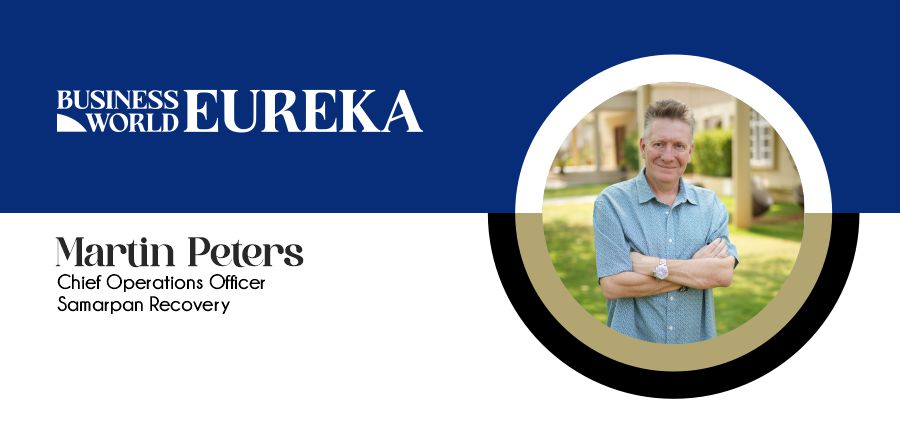
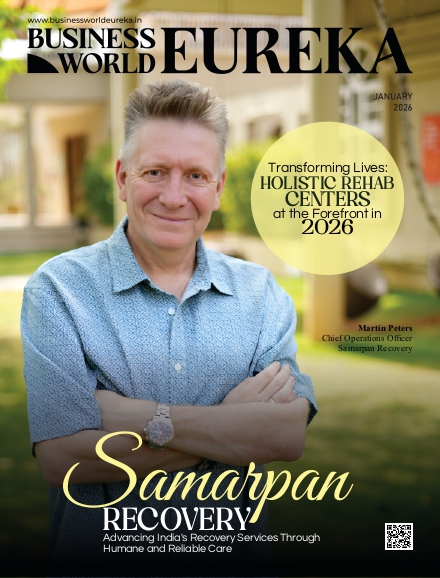
A steady guide helping Samarpan bring clarity, dignity, and stronger standards to addiction and mental health care.
Anyone who works in mental health or addiction care understands this simple truth. People arrive tired. Families arrive confused. Systems often carry old habits. Progress depends on patience, timing, and the courage to strive for improvement even when the ground keeps shifting.
This world has its own rhythm. Some days begin with calm. Some days begin with urgency. Yet every day demands commitment. It is in these moments that leaders emerge, the ones who stay long enough to help a programme grow, the ones who carry a broader view of the work because they have seen the cost of doing it carelessly.
This is where Martin’s journey meets the industry’s needs. Long before he stepped into Samarpan Recovery and De-addiction Services as its Chief Operating Officer, he had already been moving across continents, observing systems from within, and learning what helped people heal and what pushed them further away. His career began in the early 90s, during a time when addiction treatment still relied on older, narrow approaches. Training was limited in many settings. Exposure to diverse methods was rare. Programmes ran with good intentions, but many missed the depth that true recovery required.
What kept Martin in the field was the experience of seeing change. Small changes, slow changes, emotional changes, practical changes. He carried this with him from country to country, building a sense of responsibility that would define his work for decades.
Martin entered the field in 1991. He experienced inpatient care, community-based systems, private centres, and government hospitals early in his career. He worked in the National Health Service in the UK, which offered rigorous training but also real-world challenges that demanded growth far beyond textbooks.
He later spent two decades across Asia, including Thailand, India, Singapore, Pakistan, the Middle East, and the Philippines. Exposure to so many systems gave him insight into a universal reality of care services. Every centre remains in motion. Every method evolves. Every team must adjust. Excellence comes from constant refinement.
He carried this learning style with him wherever he went. He speaks often about how every country brings its own set of expectations, resources, cultural values, and public beliefs around addiction. He realised early that skills from one region must evolve before entering another. But there is something that he believes remains steady across borders. Professional standards must stay firm. “Culture guides, but it cannot excuse poor care.”
He visited services in the US, the UK, Europe, Thailand, and many parts of Asia. He witnessed strong systems, weak systems, and systems trying to grow without guidance. Some centres lacked trained staff. Others lacked licensing. Some facilities used only twelve-step ideas without offering therapy, medical support, or psychological care.
He saw services where team members depended solely on personal recovery experience, without formal training, supervision, or clinical insight. This created huge risks for clients who needed structured help.
During his early years in Thailand, he came across facilities where lived experience was treated as the only requirement for counselling. Clients were told to work twelve steps and return home. Medication was discouraged. Comorbidities received little attention. Martin realised that the sector needed clinical standards, trained professionals, ethical protocols, and a system that protects clients and staff with equal intention.
When the owner of one early centre realised the gap, Martin was asked to rebuild the programme. He brought in proper therapists, new protocols, new systems, and a model that delivered full therapy, medical support, relapse frameworks, and structured planning. Thailand soon entered a period of rapid growth in international rehab services, supported by leaders who worked to bring global standards into a new region.
Years later, families across India began travelling overseas for treatment. Many carried painful memories of recovery centres back home. Stories of clients tied up, beaten, financially exploited, or left without professional care appeared in news reports.
Martin saw that India needed more than a single centre. India needed a reliable standard. India needed evidence-based rehabilitation with safety, structure, and ethics.
He understood that some centres offered excellent care, but the overall landscape lacked regulation, licensed staff, and clarity. Many teams depended on untrained workers who had enthusiasm but limited grounding in mental health science. In such environments, mistakes multiply.
He observed something familiar across several regions. Families believed lived experience alone was enough for counselling. His comparison remains direct and honest. “If someone has a heart condition, they visit a cardiologist…” The same principle applies to addiction support.
India deserves trained professionals and a standard family can trust. Samarpan stepped into this space with clear intention.
People often speak about a single turning point that fixed their commitment to a field. When Martin reflects, he sees a long chain rather than one scene. His work brought him to individuals with severe mental health concerns, communities caught in transition, families grieving, and clients fighting old patterns. Each encounter revealed something. Recovery creates small shifts. These shifts build hope.
He remembers clients who arrived with despair and slowly regained confidence.
He remembers families who learned healthier communication.
He remembers the relief that flows when a client sees progress after years of distress.
Every breakthrough, even small, carried enough meaning to keep him in the field. He also recognises the emotional weight that surrounds addiction. Clients can be chaotic. Families can be overwhelmed. Sometimes the family wants fast progress and urges early discharge for weddings, festivals, or events. They forget how serious the struggle was before the client entered treatment.
He explains that change must be steady and sustained across time. A few quiet weeks in rehab do not always reflect readiness for home. Families require guidance because love, fear, and exhaustion can mix together and blur judgment.
Martin has seen another striking pattern. In addiction services, families and clients often believe they know more about treatment than the professionals. This mindset appears far less in cardiac care, oncology, or emergency medicine. In therapy, boundaries can blur easily. Therapists may give clients what they want instead of what they need, especially when emotional enmeshment builds.
Martin believes recovery must offer clarity and firmness. Treatment must offer long-term stability rather than quick relief. As he often says, “Boundaries protect clients and staff equally.”
There is something about this field that renews itself every day. Some mornings bring exhaustion. Some bring growth. Some bring a session that resets energy entirely. Martin shared how a difficult day can turn around after a single impactful conversation with a client. It renews purpose. It reaffirms why the work matters.
Burnout levels in this sector are high globally. Many professionals stay only eight years on average. Yet Martin continues with more than 30 years of experience. He carries a quiet endurance that comes from loving challenges and from believing in the value of recovery work.
He also invests in self-care with sincerity. He sees a therapist. He undergoes supervision. He encourages his staff to do the same. He believes professionals must care for themselves if they wish to support others. He explains that therapy for therapists is not a sign of weakness. It is simply responsible practice.
When Martin joined Samarpan, several systems were already in place, but many were unsuitable. Documents lacked clarity. Structures lacked strength. Processes drifted with no firm direction. The first thing he focused on was people.
Staff hiring became the starting point.
If the right team enters a building, the service grows.
If the wrong team stays, no protocol survives.
He rebuilt the entire staff structure, from kitchen workers to gardeners, because every role influences client well-being. He brought in clinical leads with global experience, including his colleague Obi Unaka, a professional with more than twenty-five years in rehab leadership. He promoted individuals based on ability rather than age or seniority. He rejects the idea that hierarchy should rely on age alone. Merit speaks louder.
Attrition during the first year was high because systems were being corrected. Over time, the centre built a strong core team that believed in evidence-based work, clear boundaries, and ethical culture. One staff member who joined fresh from university later became a senior therapist after years of growth and consistent commitment. Martin sees this as real progress inside a company.
He later strengthened the outpatient clinic as well. Documentation was rebuilt. Programmes were aligned. Staff who preferred personal methods instead of structured processes moved on. New therapists joined. Systems grew steadier. Clients felt the difference through organised plans and predictable care.
His guiding belief sits at the heart of Samarpan’s identity: “Clients deserve safety they can feel and dependability they can trust.”
Leadership in mental health services carries its own rhythm. It demands steady judgment, emotional strength, operational awareness, and the ability to read situations long before they escalate. Many leaders in healthcare arrive from administrative routes, yet Martin brings something rare. His training in CBT, relapse prevention, addiction counselling, and psychotherapeutic thinking guides how he views structures, policies, and daily decisions.
For him, theory never stays inside the therapy room.
It moves into hiring choices.
It moves into crisis responses.
It moves into team discussions about boundaries, family involvement, and client safety.
When faced with decisions, he aims to include his team wherever possible. Still, he believes a leader must accept moments where quick decisions are essential. Avoidance only increases risk. He speaks about colleagues he relies on deeply, including Obi Unaka at the rehab, Ishita Akula on the clinical side, Suman in facilities, and members of the wider foundation such as the programme manager Nishakant Chore and the outpatient lead, Dr. Nikita Bhati. He recognises the trust the organisation’s founder, Shrenik Baldota, has placed in him and the work Samarpan continues to build.
He emphasises that leadership in this field is rarely gentle. Clients carry heavy histories. Families bring urgency and fear. Staff members have their own stories and stress. A company can thrive only when internal culture encourages communication, responsibility, and personal accountability.
When Martin first entered this line of work, addiction treatment looked very different. Many services in the West depended almost entirely on 12-step frameworks. Confrontation-based methods were common. Trauma-informed care was marginal. Relapse prevention tools were still developing.
Language was different. Expectations were different. Family involvement was limited or inconsistent.
Over the years, the field expanded through research and exposure. Programmes adopted CBT, DBT, motivational work, trauma therapies, relapse frameworks like Gorski -CENAPS Marlatt and Gordon, and integrated models that included both mental health and addiction under one roof. Clients with depression, anxiety, bipolar concerns, PTSD, or other conditions began receiving linked treatment instead of being split between departments.
He has seen these transitions across continents. In India, the sector is still catching up. Many centres run through medical detox plus twelve-step ideas alone. Many professionals receive general training but limited exposure to specialised addiction courses. India has a growing population of young therapists with potential, yet few formal pathways to develop addiction-specific expertise.
As a result, Samarpan invests heavily in staff training. The outpatient team receives advanced learning in EMDR, somatic practices, internal family systems, and other internationally recognised approaches. Martin believes in giving his therapists the tools they deserve so clients receive structured, ethical, evidence-backed treatment.
He also recognises how Western models require cultural adaptation. Indian families carry deep involvement in emotional events, financial decisions, and the wellbeing of their loved ones. Therapy must respect this involvement while encouraging healthy boundaries that support long-term outcomes.
This industry survives on compassion, yet compassion alone cannot stabilise a centre. Martin learned early that documentation is one of the quietest but strongest pillars of safety.
He explains that its value becomes clear only when something goes wrong.
Records help identify trends.
Records help correct mistakes.
Records protect clients.
Records protect staff.
When Samarpan worked toward CARF accreditation, more than 1600 standards required full evidence of compliance. These standards covered hygiene checks, health and safety practices, clinical work, operational protocols, training systems, and ethical documentation. External surveyors inspected the centre, measured systems, and offered recommendations.
Martin sees audits as opportunities rather than criticism. Every external insight offers a fresh lens. These audits help Samarpan refine its systems, strengthen its direction, and remain accountable beyond internal opinion. Samarpan is the only centre in India with CARF accreditation, which sets it apart in a landscape where regulation remains inconsistent.
He stresses that treatment plans must be clear. Screening processes must be thorough. Boundaries must be documented. Codes of conduct must be understood across the entire staff team.
And still, he admits something honest. Even with strong systems, human behaviour can bring challenges. Some staff members in the field choose personal shortcuts or enter inappropriate dynamics with clients. Some use clients for financial favour or social comfort. Others socialise with clients outside sessions or invite blurred relationships.
Martin believes ethical culture must stand firm; Professional limits must remain visible, Care must stay free from personal agendas, and teams must receive education on why boundaries matter.
Addiction does not isolate itself to the person who uses substances. It enters the home, settles into communication patterns, influences decisions, and strains relationships. Families arrive exhausted, confused, or carrying shame.
Martin has seen families who want their loved ones home early because they miss them or because a celebration is approaching. He has seen families who struggle to understand why the client needs long-term change. He has seen families who blame themselves or blame the client.
For recovery to last, the home must support the process. Proof of this lies in how better outcomes appear when families receive education early. They learn the purpose of boundaries. They learn cycles of relapse. They learn emotional regulation. They learn patience, communication, and self-responsibility.
Samarpan invests in family support through sessions during inpatient care and through a free weekly support group in Mumbai. Families who attend often leave with more clarity, less fear, and a healthier view of their loved one’s journey. Martin believes these spaces are essential. They offer understanding instead of judgment, steadiness instead of panic, and room to breathe instead of carrying guilt alone.
He also recognises how heavy the emotional load can feel. Watching a loved one struggle with alcohol, drugs, gambling, or other addictions can bring pain that sits deep in the chest. Families deserve guidance as much as clients do. They deserve relief from confusion. They deserve a place where their questions receive patient answers.
India stands at a powerful turning point. Awareness is rising. Young people speak more openly about mental health. Communities seek structured support. Online conversations have increased visibility around professional therapy. Yet the gap between demand and access remains large.
Martin sees both hope and caution.
There is hope in the enthusiasm of young practitioners.
There is hope in the rising curiosity around evidence-based care.
There is hope in companies like Samarpan that invest deeply in training and structure.
He sees caution in irresponsible social media content, where some professionals post dramatic messages for attention rather than education. He sees caution in unregulated centres that run without licensed staff. He sees caution in the challenges new therapists face when clients undervalue their time, question their fees, or treat therapy as something optional.
He explains that many people ask therapists for reduced fees, unaware of the years of education, supervision, insurance, documentation, and emotional labour the work demands. A cardiologist is rarely questioned about price, yet therapists face this pressure daily.
For the field to grow, India must build respect for mental health professionals. Well-trained staff must earn sustainable wages. Ethical leaders must guide new centres. Companies must create environments where clinicians stay long-term instead of leaving due to burnout.
Working across continents taught Martin something simple. Human beings carry immense resilience. They rise through difficulty across cultures, languages, and histories. The expressions may change, but the emotional core remains familiar; Shame, fear, loneliness, hope, anger, and longing appear in every region.
He has seen how Asian families value interdependence and closeness, while many Western cultures emphasise individual decision-making. Yet the desire for safety, clarity, and connection appears everywhere. He believes most people carry goodness within them, even when choices falter, intention often comes from a place of pain rather than malice.
He also worked in high-security and forensic settings where human behaviour revealed its most distressed forms. These experiences taught him endurance, empathy, and the ability to separate actions from identity.
Through all of this, he carries a steady belief in people. Recovery begins when someone feels seen, understood, and supported by a team that cares without judgment.
A rehabilitation centre is more than therapy rooms and clinical charts. It is a living ecosystem. Every person influences the client experience, from the therapist to the housekeeping team. Many centres struggle because they invest only in clinical improvements while operational foundations remain weak.
Martin noticed this early in his career. Systems hold the service together; Documentation, communication, safety protocols, training frameworks, handover structures, and emergency planning are the roots of reliable care, and without these, even talented therapists struggle to deliver consistent support.
He shared how some teams ran individual programmes in isolation, each person following their own method; records were incomplete, treatment plans lacked structure or were non-existent and team synergy suffered.
At Samarpan’s outpatient centre, he met a similar challenge when he arrived. Therapists were doing meaningful work, yet the wider structure lacked uniformity, documentation was loose, programmes moved in different directions and each therapist built their own format, which created confusion for clients.
Martin introduced clarity; Old systems and beliefs were replaced, team communication became regular, documentation standards rose and unethical practice was challenged.
Staff who preferred unstructured and unaccountable practice left the organisation and ew professionals joined with enthusiasm for training and growth.
Everything aligned under one idea. Clients deserve safety they can feel, dependability they can trust, and care that does not drift with personal preference.
This is the Samarpan identity he continues to build.
Mental health workers often carry heaviness from the environment they serve. Burnout shadows even the most committed professionals. Many leave the field around the eight-year mark.
Martin understands this better than anyone. He has seen colleagues fall into emotional exhaustion, especially when boundaries blur or the organisation lacks clear support. He believes self-care is essential.
He also believes leaders must model what they encourage.
He attends therapy himself.
He maintains clinical supervision.
He steps away when the weight becomes too strong.
He encourages staff to do the same, reminding them that personal therapy does not equal weakness. It signals responsibility. A therapist cannot carry clients’ emotional worlds without first tending to their own.
His honesty around this creates an atmosphere where staff feel safe to acknowledge their emotional limits. It also creates a healthy culture for Samarpan, one where people invest in growth rather than hide stress behind forced calm.
Across 30 years, Martin witnessed breakthroughs in many forms.
Sometimes a client who has entered physical collapse begins eating well again.
Sometimes, a family that arrives in tears discovers steadier communication.
Sometimes, someone who believed they had no future begins imagining one again.
These moments sustain him.
They bring energy into difficult weeks.
They remind him that recovery is a slow flame, not a spark.
He explained that some clients arrive with severe physical complications. Doctors warn them about liver failure, organ damage, or the need for a transplant. Yet medical danger often does not stop addiction. Emotional wounds sit underneath, feeding the behaviour long after the body begs for rest.
This is why Samarpan integrates psychological work, emotional regulation, trauma processing, mindfulness, structured therapy, and medical support. Many clients carry stories far deeper than substance use. Trauma, unmet needs, loneliness, fear, pressure, and unresolved memories create invisible currents that push their decisions.
Addiction is rarely a simple act of choice.
It is a coping strategy that grew into a trap.
And recovery requires more than discipline.
It requires understanding.
Martin highlights that some people can drink socially with ease. Others cannot stop after the first glass. The difference lies in the inner history, temperament, and emotional architecture of each person.
This is why evidence-based models matter.
This is why companies like Samarpan focus on consistency, depth, and emotional safety.
Each layer reveals what the person carries beneath the surface.
While Martin speaks warmly about people, he also holds firm boundaries around behaviour that harms clients or weakens trust. Across his career, he has witnessed concerning patterns in some facilities across India and other regions.
Some staff members involved clients in personal issues.
Some accepted money from families.
Some formed emotional relationships with clients.
Some socialised outside sessions.
Some offered advice without training.
These behaviours weaken the field. They create danger and break trust.
Martin believes India will benefit from stronger regulation, clearer licensing laws, and visible consequences for unethical conduct.
Until then, companies must lead by example.
Samarpan’s code of conduct is strict.
Training remains ongoing.
Supervision is constant.
Ethics are treated as non-negotiable.
Without this foundation, programmes drift. With it, they earn trust from clients, families, and the wider community.
One of the most striking realities Martin observes is how undervalued therapists can feel in India.
People often question fees.
People expect discounts.
People compare therapy to casual guidance.
People want an immediate fix or advice
People think Psychiatrists are therapists
Yet, therapists invest years in education, they pay for supervision, insurance, licensing, continued learning, and emotional labour. They carry the responsibility of keeping clients safe.
Martin hopes Indian society begins to view therapists with the same regard given to physicians, dentists, and surgeons. He believes this cultural shift will improve retention, elevate standards, and help more companies deliver world-class care.
A country grows when its healers are respected.
Samarpan is more than a rehab facility.
It is part of a foundation dedicated to service, growth, and long-term impact – it is a non-profit orgnaisation.
It offers an inpatient programme with structure seven days a week, thorough therapy, trained professionals, trauma work, yoga, meditation, group processes, medical support, and holistic care.
Martin is clear that cost is often misunderstood.
Running a centre with high-quality food, staff training, facility maintenance, safety checks, and clinical depth requires investment.
Samarpan carries a responsibility to provide quality rather than shortcuts.
He explains that people often compare Samarpan’s rates to extremely low-cost facilities. He encourages families to examine what those centres provide. With ₹30,000 per month, a centre cannot offer intensive therapy, daily programmes, trained counsellors, licensed psychologists, medical supervision, and accreditation standards.
Samarpan delivers what it promises.
It invests heavily in its people.
It commits to ethical care.
It carries systems that protect clients day and night.
This is why families who visit the centre feel a difference.
This is why many clients find steadier ground.
This is why the company continues to evolve each year.
Through his years working in the UK, Thailand, Europe, South Asia, and the Middle East, Martin observed something consistent across cultures.
Human beings have deep endurance.
People rise when they have support.
People soften when they feel understood.
People rebuild when given space to recover at their own pace.
He has seen the goodness in people again and again.
He believes most individuals desire healing, stability, and connection.
Even when choices break trust, the root often lies in emotional pain rather than cruelty.
He remembers work in secure units, where clients carried severe histories. These environments tested his patience and compassion, yet the underlying lesson stayed with him. Every person holds a story worth hearing.
This belief appears in Samarpan’s culture today.
Clients are received without judgment.
Families are welcomed without blame.
Staff are trained to listen before advising.
Recovery becomes possible when human dignity stands at the centre.
Martin ends many conversations by saying he continues to learn.
After thirty years, he still refines his approach.
He still invites feedback.
He still revisits his decisions.
He still seeks supervision.
This mindset keeps Samarpan growing each year.
The company continues to strengthen systems, hire skilled professionals, expand training, and support its community.
He reminds us that no service reaches perfection.
A centre grows only when it stays open to improvement.
A leader grows only when learning stays alive.
A company grows only when its purpose remains steady.
Martin carries this purpose with quiet commitment.
He never raises his voice when describing his philosophy.
He never seeks dramatic praise.
He simply works, solves, refines, and continues forward.
In an industry where lives depend on daily choices, this steady energy becomes a guiding light.
Martin Peters stands at the centre of Samarpan’s ongoing journey with a calm conviction. He brings history, experience, curiosity, and humility. He brings leadership that values ethics as much as skill. He brings trust in his team and faith in the process.
Samarpan continues to move forward because its foundation rests on people who care deeply about the work, people who guide, support, rebuild, and commit every day.
And Martin remains the quiet force helping the organisation reach higher ground.

Welcome to Business World Eureka, your premier destination for global business intelligence. We are a leading digital magazine platform, committed to delivering the latest business insights, trends, technologies, news and press releases from across the globe.
©Copyright at Business World Eureka 2025 | All Rights Reserved